
Insight
AI Strategyvoice-aiproductionretell-aivapiai-observabilityai-governancehuman-in-the-loopai-cost-management

Retell AI vs Vapi: Comparing Voice AI Platforms for Production Reliability

Retell AI, Vapi, and similar platforms make voice AI demos fast to ship—but production systems need governance, observability, security, cost control, and human escalation before they can serve real customers at scale.
By Mauli PatelPublished Jun 17, 2026Updated Jun 17, 20269 min read
Retell AI vs Vapi: Comparing Voice AI Platforms for Production Reliability – AI Strategy

Building a voice AI demo can take hours. Running a production voice AI system that handles real customers, controls costs, maintains quality, and remains available 24/7 is an entirely different challenge.

Platforms such as Retell AI and Vapi have made voice AI significantly more accessible. Organisations can connect speech-to-text, language models, telephony providers, and workflow automation faster than ever before.

However, successful voice AI deployment is not determined by how quickly a call can be launched. It is determined by reliability, governance, observability, security, and operational control after deployment. At KyszTech, we view voice AI as a production system that requires engineering discipline—not simply a conversational interface.

Retell AI vs Vapi at a Glance

Both platforms accelerate voice AI development—but production reliability depends on how you govern telephony, observability, cost, and human escalation on top of them.

Retell AI

Low-latency voice agents with built-in telephony and a guided builder.

Best for

Fast deploymentAppointment bookingTwilio workflowsOperations dashboards

Strengths

  • Optimized low-latency voice stack
  • Visual agent configuration
  • Built-in call analytics
  • Strong telephony orchestration
  • Quick path from demo to pilot

Watch outs

  • Deep custom orchestration needs backend work
  • Production governance is your responsibility
  • Complex enterprise RBAC may need extensions

Vapi

Developer-first voice API with flexible tool calling and provider choice.

Best for

Developer teamsCustom tool callingRapid prototypingMulti-provider setups

Strengths

  • Highly flexible API surface
  • Excellent tool/function calling
  • Provider-agnostic architecture
  • Fast experimentation cycles
  • Strong webhook integrations

Watch outs

  • More assembly required for production ops
  • Observability must be designed in
  • Governance layer is not included out of the box
Head-to-head comparison

Feature-by-feature breakdown

How Retell AI and Vapi compare across setup, pipeline, operations, and scale.

CriteriaRetell AIVapi
Getting started
Time to first working callExcellentExcellent
No-code / low-code setupExcellentGood
Developer API flexibilityGoodExcellent
Voice pipeline
Latency optimizationExcellentStrong
STT / LLM / TTS orchestrationExcellentStrong
Barge-in & interruption handlingStrongStrong
Telephony & routing
Built-in telephony workflowsExcellentGood
Provider flexibilityGoodExcellent
Call transfer & escalation hooksStrongStrong
Agent capabilities
Visual agent builderExcellentModerate
Tool / function callingStrongExcellent
Prompt & workflow managementStrongStrong
Production operations
Built-in analytics dashboardExcellentGood
Conversation traceabilityStrongGood
Cost & token visibilityGoodGood
Human escalation designModerateModerate
Enterprise readiness
Security & access controlsGoodGood
Compliance & recording policiesModerateModerate
Custom backend integrationsGoodExcellent
Scale & reliability
Running demos & pilotsExcellentExcellent
24/7 production at volumeStrongStrong
Multi-provider failoverGoodStrong

Verdict

Choose the platform—engineer the production layer

Retell AI is often the faster path when teams want a guided builder, telephony orchestration, and operational dashboards out of the box—especially for appointment-heavy and customer-facing voice workflows.

Vapi shines when engineering teams need maximum API flexibility, tool calling, and provider choice while assembling their own production governance on top.

Neither platform removes the need for observability, security boundaries, cost controls, and human escalation. The teams seeing the best results treat Retell AI or Vapi as one layer in a broader production architecture.

The Hidden Complexity Behind Voice AI

Most voice AI demonstrations focus on conversations. Production environments expose a different set of challenges that only appear when real customers, network conditions, and business workflows enter the picture.

A voice AI system may involve telephony infrastructure, speech-to-text services, large language models, text-to-speech engines, CRM integrations, scheduling systems, internal business APIs, and analytics platforms. The challenge is no longer generating a response—it is ensuring the entire workflow remains reliable when thousands of calls occur simultaneously.

  • Latency across speech, AI, and telephony services
  • Escalation to human agents
  • Cost management across providers
  • Monitoring and debugging failed conversations

Retell AI and Vapi Solve Platform Problems

Platforms such as Retell AI and Vapi provide valuable infrastructure that accelerates development. They help teams move from proof-of-concept to deployment much faster than building every component from scratch.

Typical capabilities include call orchestration, agent configuration, telephony integration, prompt management, tool calling, analytics dashboards, voice selection, and call routing.

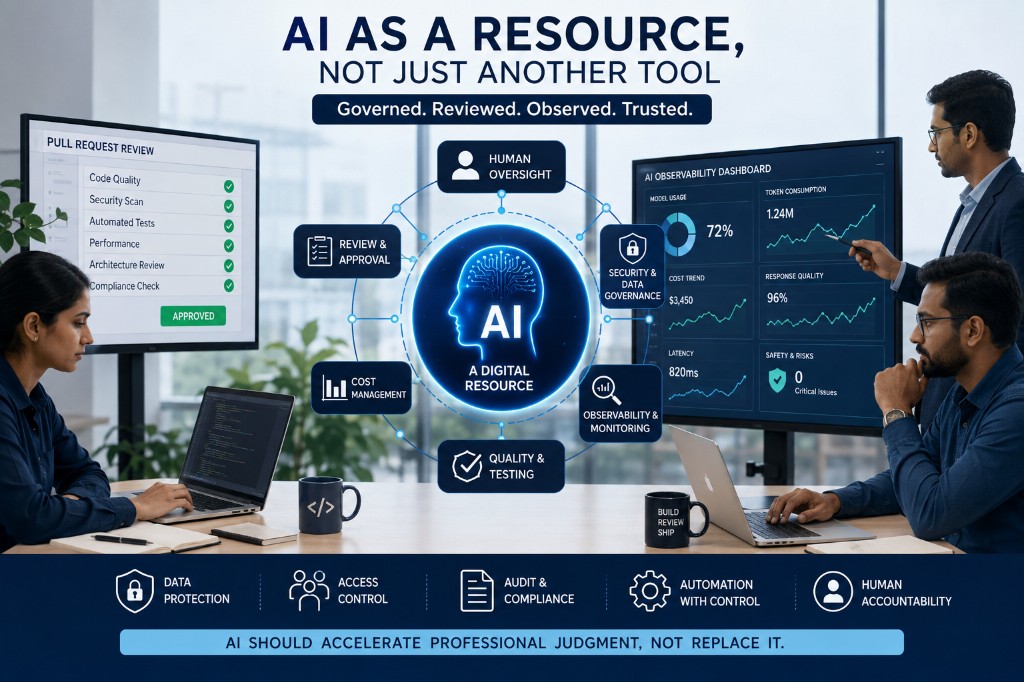
However, no platform removes the need for production governance. Voice AI success depends as much on operational design as platform capabilities.

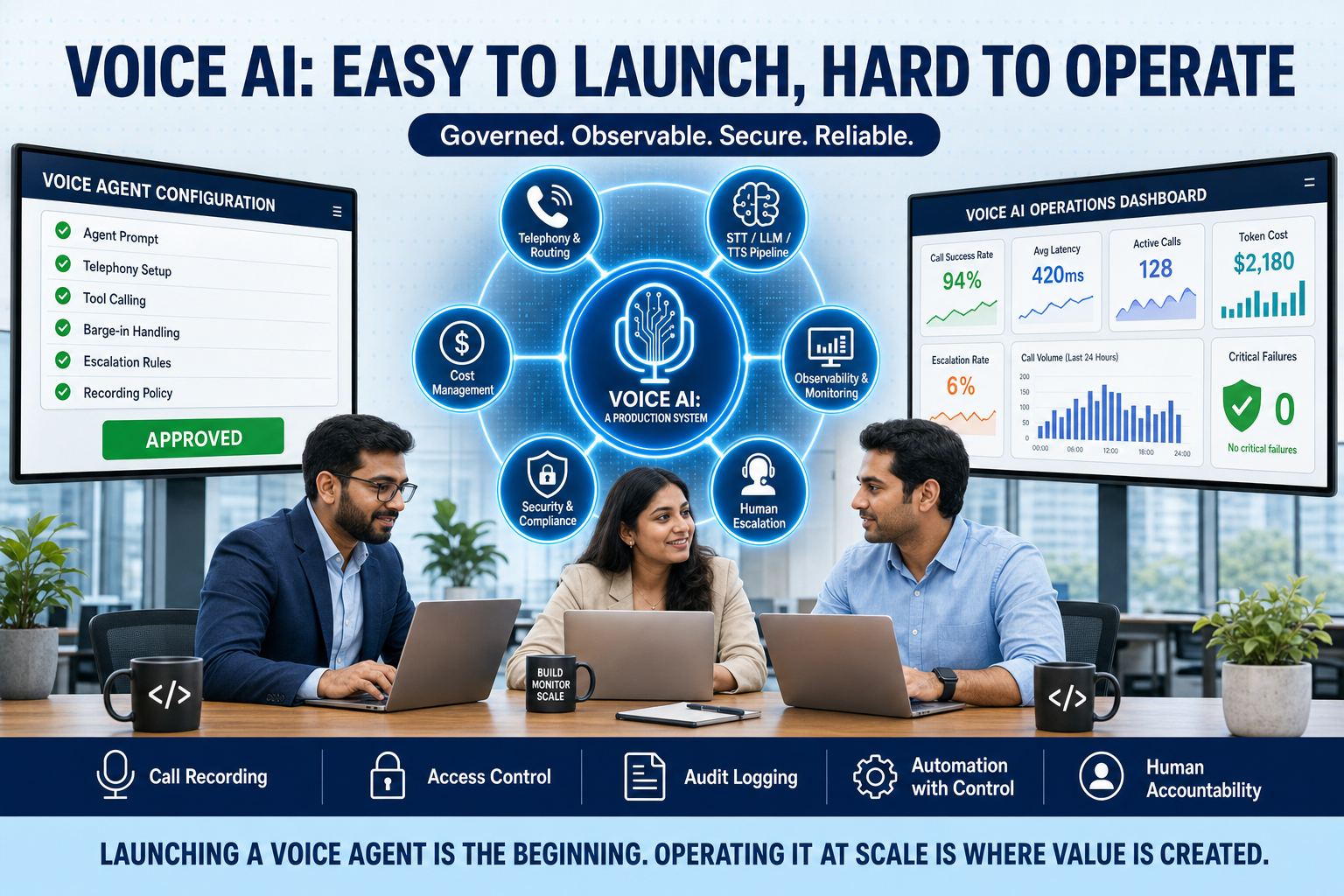
Voice AI production infographic showing agent configuration, operations dashboard, telephony and STT/LLM/TTS pipeline, observability, human escalation, security, and cost management
Voice AI is easy to launch but hard to operate at scale: configuration, telephony, pipeline reliability, observability, governance, and human accountability.

How KyszTech Leverages Voice AI

KyszTech builds and integrates voice AI solutions using modern conversational AI technologies, telephony platforms, workflow automation systems, and custom backend services.

Whether leveraging platforms such as Retell AI and Vapi or developing custom voice AI architectures, our focus remains the same: reliable, observable, secure, and production-ready systems.

Our voice AI work spans multilingual agents, customer support automation, appointment scheduling, lead qualification, CRM integrations, and production monitoring—including implementations such as our Multilingual AI Voice Agent Platform. Explore our voice AI agents service to see how we help teams move from prototype to production.

  • Multilingual voice agents
  • Appointment scheduling & lead qualification
  • CRM integrations
  • Production monitoring & governance

Final Thoughts

The organisations achieving the greatest return from voice AI are not necessarily those deploying the largest number of agents. They are the organisations that treat voice AI as a production system requiring governance, observability, security, cost management, and human accountability.

Launching a voice AI agent is the beginning of the journey. Operating a reliable voice AI platform at scale is where long-term business value is created.

If your organisation is evaluating Retell AI, Vapi, or a custom voice AI solution, talk to KyszTech about designing a practical path from prototype to production.

Mauli Patel profile

Author

Mauli Patel

Java Developer at KyszTech, building scalable backend systems, APIs, and enterprise-grade application solutions.

Frequently Asked Questions

Demos focus on conversation quality in controlled conditions. Production systems must handle network failures, latency across multiple providers, compliance requirements, cost spikes, hallucinations, escalations, and thousands of concurrent calls—while remaining observable and secure.

Retell AI and Vapi accelerate voice AI development with call orchestration, telephony integration, agent configuration, prompt management, tool calling, analytics, and voice selection. They solve platform and integration problems but do not replace production governance.

Custom voice AI becomes important when teams need proprietary knowledge retrieval, industry-specific compliance, internal system integrations, multi-provider failover, advanced reporting, or specialized security and regional deployment controls beyond standard platform configuration.

Key metrics include call completion rates, latency across STT/LLM/TTS stages, tool execution success, token and cost consumption, escalation rates, error traces, sentiment signals, and full conversation traceability for debugging failed interactions.

KyszTech designs and integrates voice AI systems with telephony platforms, workflow automation, CRM connections, observability, cost controls, and human escalation paths—whether building on Retell AI, Vapi, or custom architectures.

Next steps

Ready to move voice AI from demo to production?

KyszTech helps organisations design reliable voice AI systems with observability, governance, secure integrations, cost controls, and clear human escalation—on Retell AI, Vapi, or custom platforms.