


Cloud & DevOps for AI Systems
Deploy AI and enterprise systems on secure, scalable cloud infrastructure using best DevOps practices and automation pipelines.
Scalable cloud infrastructure and DevOps pipelines for AI and enterprise platforms.
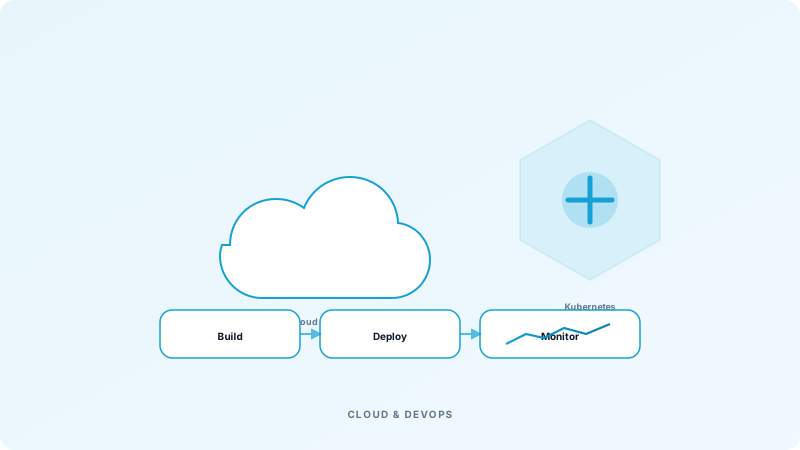
AI workloads have unique infrastructure demands—inference latency, GPU scheduling, vector database hosting, and unpredictable traffic spikes. We design cloud architectures on AWS, Azure, and GCP with Kubernetes, Terraform, and CI/CD pipelines built for both traditional apps and AI services. Environments are provisioned as code so dev, staging, and production stay consistent and auditable. We also implement autoscaling, cost dashboards, and incident runbooks so your team can operate confidently after handoff.
How We Deliver Value
Infrastructure as Code for reproducible, auditable environments
CI/CD pipelines that ship AI and application changes safely and frequently
Monitoring, alerting, and cost controls so you know what is running and what it costs
Key Features
- AWS, Azure, and GCP architecture
- Kubernetes deployments
- Infrastructure as Code (Terraform)
- CI/CD pipelines
- Monitoring and observability
- Cost optimization
- GPU and inference endpoint management
- Secrets management, networking, and zero-trust security patterns
Use Cases
- AI model deployment
- Cloud migration projects
- High-scale infrastructure
- Microservices hosting
- AI inference platforms
- Multi-region disaster recovery
- Environment provisioning for dev, staging, and production
Frequently Asked Questions
Everything you need to know about Cloud & DevOps for AI Systems
We work across AWS, Azure, and GCP. We help you choose based on existing commitments, AI service availability, compliance needs, and cost profile.
Yes. We audit resource utilization, right-size instances, implement autoscaling, and apply reserved capacity strategies—often reducing costs 20–40% without sacrificing performance.