
Data Preparation
Document Quality
Chunking Strategy
- Ensure source documents are clean and well-formatted
- Remove duplicates and outdated content
- Standardize document formats where possible
- Validate document completeness
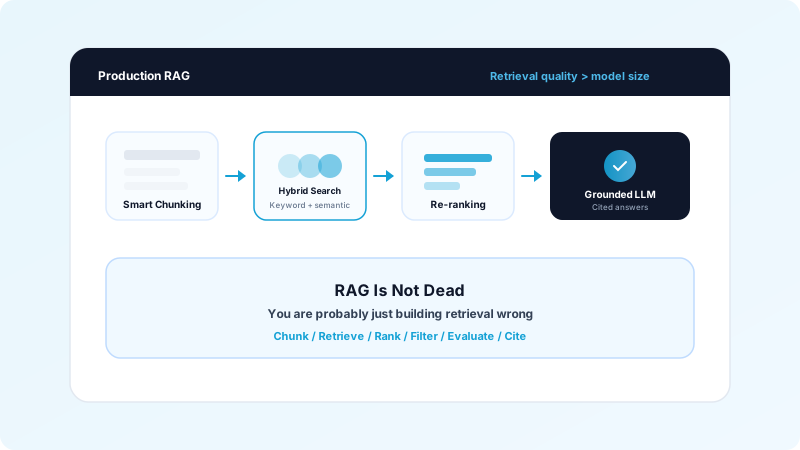
- Choose appropriate chunk sizes (typically 200-500 tokens)
- Implement overlap between chunks for context preservation
- Consider semantic boundaries, not just token limits
- Test different chunking strategies for your use case
Embedding and Indexing
Embedding Model Selection
Vector Database
- Choose models appropriate for your domain
- Consider multilingual requirements
- Balance quality vs. cost and latency
- Test embedding quality on your data
- Select appropriate vector database (Pinecone, Weaviate, Qdrant, etc.)
- Configure appropriate index parameters
- Plan for scalability and replication
- Implement backup and recovery procedures
Retrieval Optimization
Hybrid Search
Reranking
- Combine semantic and keyword search for better results
- Tune weighting between semantic and keyword components
- Implement query expansion and rewriting
- Use filters for metadata-based retrieval
- Implement reranking models for top-K results
- Balance reranking accuracy vs. latency
- Consider cross-encoder models for final ranking
Generation and Response
Prompt Engineering
Response Quality
- Design effective prompts with context and instructions
- Include examples and few-shot learning where appropriate
- Implement prompt versioning and A/B testing
- Handle edge cases and error scenarios
- Implement response validation and filtering
- Add citation and source attribution
- Handle cases where no relevant information is found
- Provide fallback responses for errors
Monitoring and Observability
Metrics to Track
Logging
- Query latency (p50, p95, p99)
- Retrieval accuracy and relevance
- Generation quality scores
- User feedback and satisfaction
- Error rates and types
- Log all queries and responses
- Track retrieval sources and scores
- Monitor model performance and costs
- Implement alerting for anomalies
Security and Compliance
Data Privacy
Content Safety
- Ensure data encryption at rest and in transit
- Implement access controls and authentication
- Comply with GDPR, CCPA, and other regulations
- Plan for data deletion and retention policies
- Implement content filtering and moderation
- Prevent prompt injection attacks
- Validate and sanitize user inputs
- Monitor for inappropriate content generation
Performance Optimization
Caching
Scaling
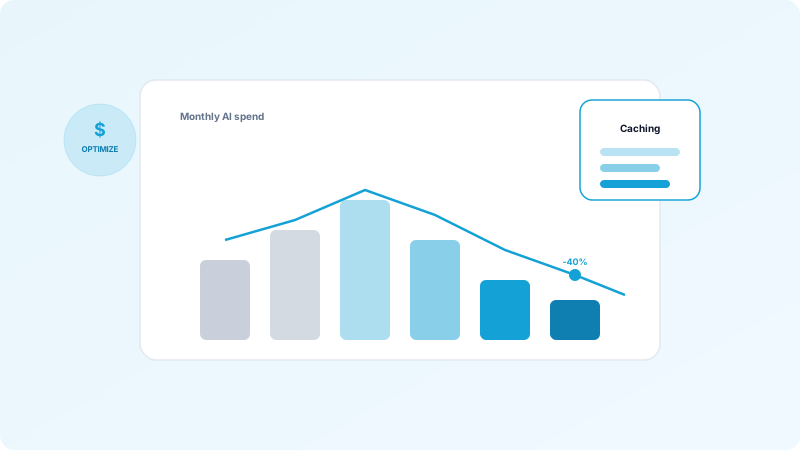
- Cache common queries and responses
- Implement semantic caching for similar queries
- Use CDN for static content
- Cache embeddings for frequently accessed documents
- Plan for horizontal scaling
- Implement load balancing
- Use async processing for heavy operations
- Optimize database queries and indexes
Testing and Validation
Unit Testing
Integration Testing
- Test individual components (retrieval, generation, etc.)
- Validate chunking and embedding quality
- Test error handling and edge cases
- Test end-to-end workflows
- Validate system behavior under load
- Test with real-world queries
- Perform security and penetration testing
Deployment
CI/CD Pipeline
Documentation
- Automate testing and validation
- Implement gradual rollouts
- Plan for rollback procedures
- Version control all configurations
- Document system architecture
- Provide API documentation
- Create runbooks for operations
- Document troubleshooting procedures
Conclusion
Deploying RAG systems to production requires attention to many details. Use this checklist to ensure you've covered all critical aspects for a successful deployment.