
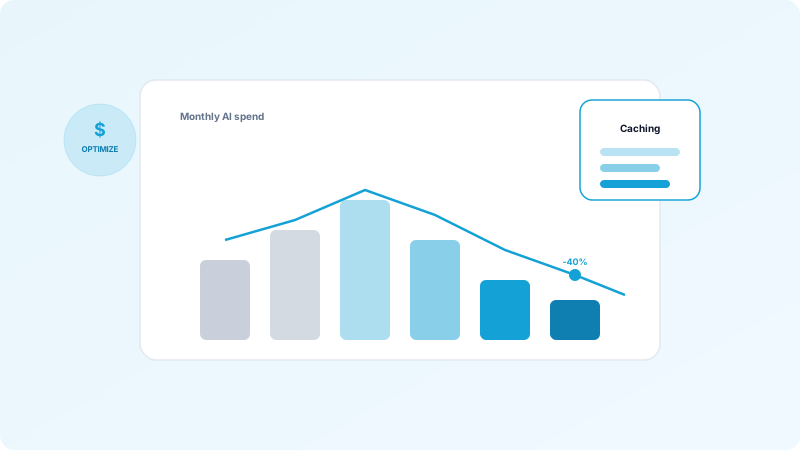
Understanding AI Costs
Infrastructure Costs
Model Costs
Operational Costs
- Compute resources (GPUs, CPUs)
- Storage for models and data
- Network bandwidth
- Cloud service fees
- API costs for hosted models
- Training and fine-tuning expenses
- Model serving infrastructure
- Monitoring and logging
- Development and maintenance
- Support and troubleshooting
- Compliance and security
- Data management
Infrastructure Optimization
Right-Sizing Resources
Spot Instances and Preemptible VMs
Use spot instances for non-critical workloads:
Reserved Instances
For predictable workloads:
Multi-Cloud Strategy
- Monitor actual resource usage
- Scale down during low-traffic periods
- Use auto-scaling for variable workloads
- Choose appropriate instance types
- Training jobs
- Batch processing
- Development and testing
- Can save 60-90% on compute costs
- Commit to 1-3 year terms
- Significant discounts (30-70%)
- Plan capacity carefully
- Use different clouds for different workloads
- Take advantage of pricing differences
- Avoid vendor lock-in
- Optimize for cost and performance
Model Optimization
Model Selection
Model Quantization
Reduce model size and inference cost:
Model Caching
Batch Processing
- Choose models appropriate for your use case
- Smaller models often sufficient for specific tasks
- Consider open-source alternatives
- Evaluate cost vs. performance trade-offs
- INT8 quantization: 2-4x speedup
- INT4 quantization: 4-8x speedup
- Minimal accuracy loss
- Lower memory requirements
- Cache model outputs for common inputs
- Use semantic caching for similar queries
- Implement response caching
- Reduce redundant API calls
- Process multiple requests together
- More efficient GPU utilization
- Lower per-request costs
- Suitable for non-real-time workloads
API Cost Optimization
Request Optimization
Provider Selection
Rate Limiting and Throttling
- Minimize token usage in prompts
- Use streaming for long responses
- Implement request batching
- Cache common responses
- Compare costs across providers
- Use different providers for different tasks
- Consider open-source models
- Negotiate enterprise pricing
- Implement intelligent rate limiting
- Prioritize high-value requests
- Queue low-priority requests
- Smooth out traffic spikes
Data and Storage Optimization
Data Lifecycle Management
Efficient Data Formats
- Archive old data to cheaper storage
- Delete unnecessary data
- Compress data where possible
- Use appropriate storage tiers
- Use efficient serialization formats
- Compress data in transit and at rest
- Optimize database queries
- Implement data deduplication
Monitoring and Analytics
Cost Tracking
Performance Monitoring
- Track costs by service, project, and team
- Set up cost alerts and budgets
- Regular cost reviews
- Identify cost anomalies
- Monitor latency and throughput
- Track error rates
- Identify optimization opportunities
- Balance cost and performance
Best Practices
1. Start with Monitoring
You can't optimize what you don't measure. Implement comprehensive cost tracking from the start.
2. Regular Reviews
Conduct regular cost reviews to identify optimization opportunities.
3. Test Optimizations
Always test cost optimizations to ensure they don't impact performance or quality.
4. Consider Total Cost of Ownership
Look beyond infrastructure costs to include development, maintenance, and operational costs.
5. Automate Optimization
Use automation to scale resources, manage data lifecycle, and optimize configurations.
Conclusion
Cost optimization is an ongoing process. By monitoring costs, optimizing infrastructure and models, and following best practices, you can significantly reduce AI system costs while maintaining performance and quality.