
The Latency Challenge
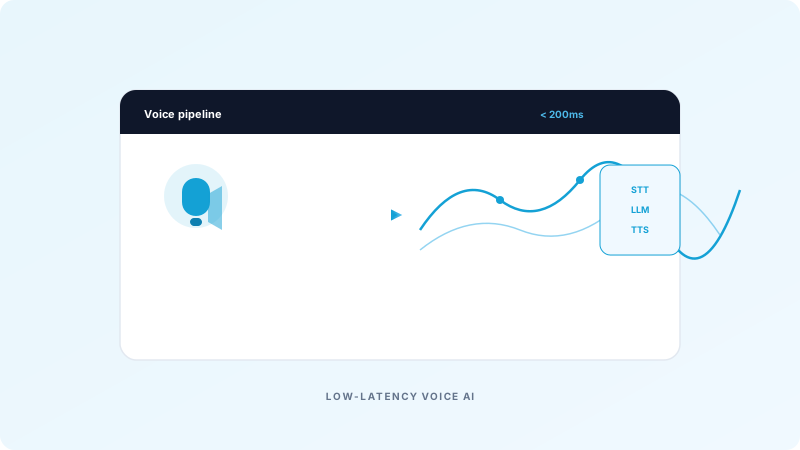
Traditional voice systems often suffer from noticeable delays that break the conversational flow. Users expect responses similar to human conversations, which means total latency (from speech to response) should be under 200ms.
Architecture Patterns
1. Edge Computing
Deploying inference models closer to users reduces network latency. Edge computing allows processing to happen at regional data centers or even on-device for some operations.
2. Streaming Processing
Instead of waiting for complete utterances, process audio streams in real-time. This enables faster response generation and reduces perceived latency.
3. Optimized Model Selection
Choose models that balance accuracy and speed. Smaller, optimized models can provide excellent results with significantly lower latency than large general-purpose models.
Optimization Techniques
Model Quantization
Quantizing models reduces memory footprint and inference time without significant accuracy loss. Techniques like INT8 quantization can provide 2-4x speedup.
Caching and Pre-computation
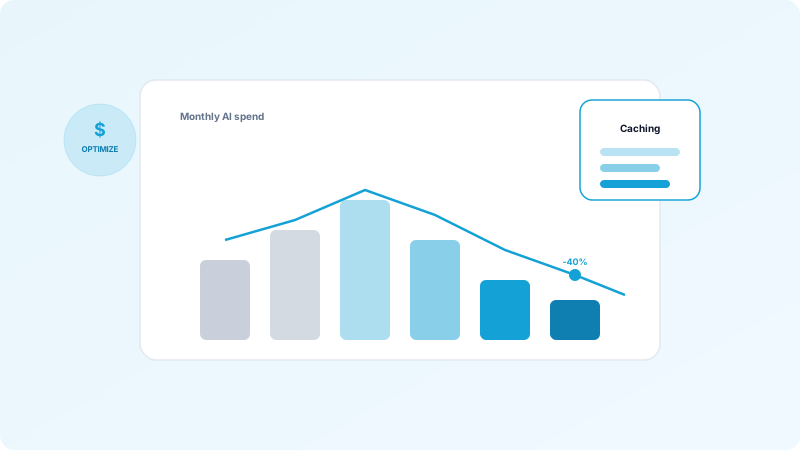
Cache common responses and pre-compute likely next steps. This is especially effective for frequently asked questions and common workflows.
Connection Pooling
Maintain persistent connections to AI services and databases to avoid connection establishment overhead.
Real-World Trade-offs
Achieving low latency often requires trade-offs:
- Accuracy vs Speed: Smaller models are faster but may have slightly lower accuracy
- Cost vs Performance: Edge computing and optimized infrastructure cost more
- Complexity vs Latency: Simpler architectures are easier to maintain but may not achieve optimal latency
Monitoring and Measurement
Implement comprehensive latency monitoring:
- End-to-end latency tracking
- Per-component latency breakdown
- P95 and P99 latency percentiles
- Real-time alerting for latency spikes
Conclusion
Building low-latency voice AI systems requires careful architecture design, optimization techniques, and continuous monitoring. By following these best practices, you can deliver natural, responsive voice experiences that delight users.