
Key Highlights
- Team Strength (25+ and growing) — When the team is small, everyone does everything. At 25+, you get specialization without losing ownership.
- Senior-minded delivery
- Clear product + engineering alignment
- Low-friction collaboration across teams
- Beyond Java (without forgetting it) — Java experience helps with enterprise maturity. The team still chooses the right tool for the job.
- Enterprise-grade backend engineering
- Modern frontend development
- Cloud-first architecture choices
- Practical AI (not AI theater) — We work with AI where it matters: integration, evaluation, reliability, and measurable outcomes.
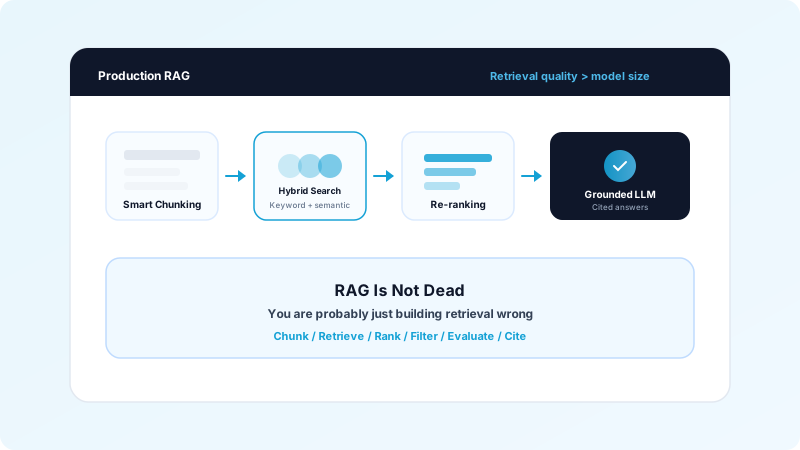
- LLM orchestration and RAG patterns
- System-level thinking for production
- Human-in-the-loop where it counts
- Quietly Building Trust — Marketing fades. Delivery stays. A strong client portfolio is the real proof—quietly earned.
- Repeat engagements
- Transparent engineering trade-offs
- Work that survives production
Leadership Perspective
"We didn't chase attention. We focused on building software that behaves in real enterprises—then let trust do the marketing."
— KyszTech founder & engineering leadership
The niche wasn't planned. It was earned.
In enterprise technology, attention is cheap. Reliability is not. KyszTech's niche grew the old-fashioned way: by repeatedly building systems that teams could trust on day one—and keep running on day ninety.
No aggressive marketing. No loud promises. Just consistent engineering, thoughtful trade-offs, and a delivery culture that respects the reality of production environments.
A team of 25+ people, with enough depth to specialize.
Today, KyszTech is a team of 25+—not because we chased growth as a metric, but because client needs kept expanding: backend, frontend, cloud, and the integration work that sits between them.
At this size, we can keep ownership while still having specialists. The result is faster iterations without the "who owns this?" confusion that enterprise teams know too well.
Many of us are Java engineers, but we're not locked in.
A strong portion of our team comes from a Java background. That foundation helps: we know how to structure services, handle long-lived systems, and design with reliability in mind.
And then we go beyond Java. KyszTech works across multiple programming languages and modern stacks—because enterprise outcomes usually require "the right tool," not "the one we started with."
Full-stack engineering, with cloud as the default mindset.
Our strength spans frontend, backend, and cloud. We care about user experience, but we also care about observability, deployment pipelines, and the subtle failure modes that appear only once your system has real users.
That's why our projects tend to feel cohesive: design decisions aren't made in one room and engineering constraints are not discovered in the next sprint.
AI, but engineered for reality.
KyszTech is actively moving into AI-driven engineering and intelligent systems. The focus is practical: evaluation, integration, and reliability—so AI becomes a useful capability, not a demo that breaks when data gets messy.
We work with AI in ways enterprises recognize: orchestrating LLM workflows, using retrieval patterns that respect your knowledge, and adding human-in-the-loop safeguards where they reduce risk.
Contributors, not just operators.
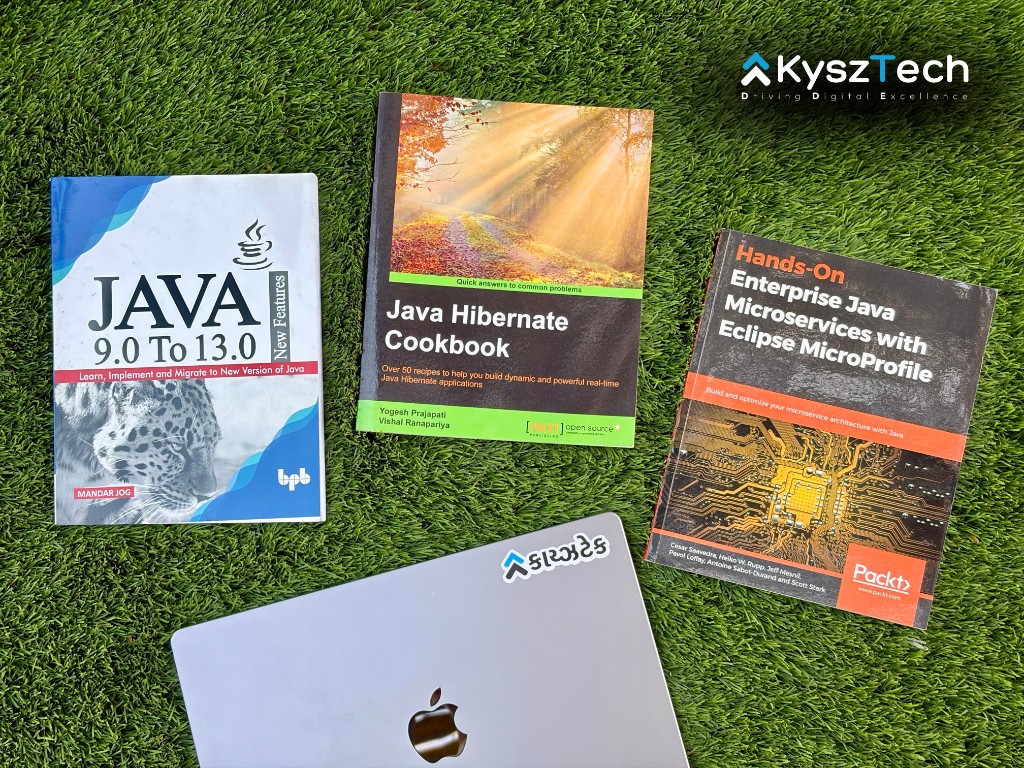
The founder and team members have contributed through book writing, technical reviews, and open-source/community participation. That matters because it keeps our thinking sharp and our engineering conversations grounded in real technical depth.
It also means we tend to ask better questions early—before the project gets expensive.
The client portfolio is the loudest proof.
If marketing isn't our strongest area, the client list is our counterpoint. KyszTech is in the race because the work earns trust: repeat engagements, delivery discipline, and outcomes that last.
That's the niche. Not a slogan—an approach: build thoughtfully, integrate deeply, ship responsibly, and improve continuously.